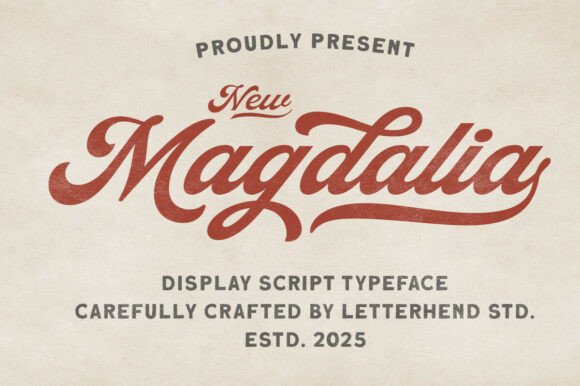
Magdalia: The Vintage Script Font with Modern Soul
There's a certain magic in letterforms that feel both timeless and freshly made—like discovering a handwritten love letter in a vintage shop that somehow speaks to you today. That's the sensation Magdalia delivers. This isn't just another script font floating in the sea of digital typefaces. It's a carefully crafted bridge between retro elegance and contemporary hand-lettered authenticity, designed for projects that need to feel personal yet polished.
At its core, Magdalia is a vintage display script font with character. Its flowing strokes carry the weight of classic typography while maintaining that imperfect, human touch that modern audiences crave. The stylish swashes aren't just decorative afterthoughts—they're intentional design elements that add movement and personality to every word. Whether you're creating a logo for a boutique bakery or designing packaging for artisanal goods, this font brings a distinct voice to your visual storytelling.
Where Retro Charm Meets Practical Design
What makes Magdalia particularly useful for real-world applications is its versatility within the display category. While it's not meant for body text, it excels exactly where you need it: headlines, logos, and branding elements that require immediate visual impact. The font's PUA encoding means all those gorgeous swashes, alternates, and special characters are actually accessible—you won't need to hunt through obscure character maps or use special software to access the full toolkit.
Consider a small business owner launching a line of handmade candles. The brand needs to convey warmth, craftsmanship, and a touch of nostalgia. Magdalia's script style naturally communicates these qualities without requiring extensive design explanation. It works for the main logo, the product labels, the website header, and even the Instagram graphics—all while maintaining visual consistency that builds brand recognition over time.
Practical Applications Across Design Projects
The beauty of a well-crafted display font like Magdalia lies in its adaptability across different mediums. For packaging design, it creates immediate shelf appeal. The flowing letterforms catch the eye in a crowded market, suggesting quality and care in the product itself. When used in social media graphics, it stops the scroll—the handwritten aesthetic feels authentic and personal in an environment often dominated by generic templates.
For editorial layouts, Magdalia brings warmth to magazine features or blog headers that might otherwise feel sterile. Wedding invitations and event stationery benefit from its romantic yet readable style. Even digital products like e-books or online courses can use this font for chapter titles or key quotes to create visual hierarchy and emotional connection with readers.
The practical reality is that most projects need more than just a beautiful font—they need a font that works within specific constraints. Magdalia's design considers this balance. While it's certainly decorative, the letterforms maintain enough structure to remain legible at various sizes, particularly important for logo design where the mark needs to work from business cards to billboards.
Building Brand Identity with Intentional Typography
Choosing a typeface isn't just about aesthetic preference—it's a strategic decision that communicates brand values before a single word is read. A vintage display script like Magdalia suggests heritage, craftsmanship, and attention to detail. It works particularly well for brands in the lifestyle, beauty, food, or artisanal spaces where authenticity matters.
However, the key to successful implementation lies in thoughtful font pairing. Magdalia's ornate style needs balancing with cleaner, more neutral typography for longer text. Consider pairing it with a simple sans-serif font for body copy or supporting information. This contrast creates visual interest while ensuring readability remains intact. Test different combinations at various sizes to see how they interact—what looks elegant in a headline might become overwhelming in smaller applications.
For entrepreneurs building their brand identity, consistency across all touchpoints is crucial. Using Magdalia across your logo, website headers, social media templates, and printed materials creates a cohesive visual language that audiences begin to recognize subconsciously. This recognition builds trust and professionalism, even for small operations.
Practical Considerations for Real Projects
Before committing to any premium font for commercial use, consider the practical aspects. Magdalia's licensing typically covers most business applications, but always verify the specific terms for your intended use—whether that's for a client project, merchandise, or digital products. The font's inclusion of multiple styles and alternates means you're getting more than a single script face; you're getting a toolkit for creating varied yet cohesive designs.
Readability testing remains essential, even with the most beautiful typography. While Magdalia excels at display sizes, always test it in the specific context where it will appear. A font that looks stunning in a design mockup might need size or spacing adjustments when implemented in a real website header or printed poster. Pay attention to how the swashes interact with surrounding elements—sometimes less ornamentation creates stronger impact.
For content creators and marketers, this font offers a way to stand out in crowded visual spaces. Its distinctive style helps your graphics feel more intentional and crafted compared to overused system fonts. Whether you're creating Pinterest graphics, YouTube thumbnails, or email headers, Magdalia adds that layer of professionalism that suggests you take your visual communication seriously.
Ultimately, the right typography choice depends on your specific project goals and audience expectations. Magdalia won't be the right fit for every application—but for projects that need to feel handmade yet polished, classic yet current, it offers a distinctive voice that's worth exploring. Its combination of aesthetic appeal and practical accessibility makes it a valuable addition to any designer's toolkit, particularly when the brief calls for personality and warmth in the visual presentation.