Oldbone: Capturing the Spirit of Traditional Ink
There is a specific kind of energy found in the old tattoo parlors of the mid-20th century—a mix of grit, precision, and undeniable cool. It was an era where bold lines and solid shading weren't just stylistic choices; they were necessities of the craft. If you have ever tried to recreate that vintage aesthetic in your design work, you know that modern, clean-cut typefaces often fall flat. They lack the weight, the history, and the attitude that defined the rockabilly and biker cultures of the 1950s. This is the exact gap that Oldbone was designed to fill. It is not merely a collection of glyphs; it is a digital resurrection of classic Americana, designed to inject instant character into any project you are working on.
Understanding the Oldbone Aesthetic
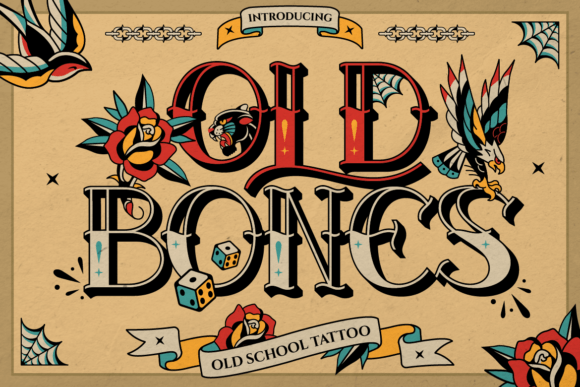
At its core, Oldbone is a premium font rooted in the visual language of Traditional American tattooing. You can see the influence of "Sailor Jerry" flash sheets in its DNA. The typeface features the heavy, structured serifs and the slight condensed nature that made vintage signage readable from a distance and timeless in its appeal. It avoids the overly polished look of modern vector art, instead embracing a design that feels grounded and substantial.
What sets this typeface apart from other vintage-inspired fonts on the market is its duality. It ships with two distinct styles: Regular and 3D. The Regular style is perfect for clean, flat designs where you want the weight of the letters to do the talking. However, the 3D style is where the magic happens. It provides an immediate isometric depth, creating a shadow effect that makes the text pop off the page. This eliminates the need for complex layering or manual shadowing in your design software, saving you valuable time while delivering a professional, "bolder" look. It is a display font that demands attention, making it an ideal candidate for headers, logos, and hero sections.
Practical Applications for Business Owners and Creatives
For small business owners, typography is a silent ambassador for your brand. If you run a barbershop, a café with a vintage concept, a craft brewery, or a clothing line rooted in streetwear, your font choices communicate your values before a customer reads a single word of your copy. Oldbone acts as a visual shorthand for authenticity. It tells your audience that you value tradition, craftsmanship, and a bit of rebellious spirit.
Consider the versatility of this typeface across different mediums. In packaging design, Oldbone can help your product stand out on a crowded shelf. Imagine a hot sauce label or a craft coffee bag using the 3D style for the brand name; it instantly conveys a "small-batch," handmade quality. For gig posters and album sleeves, the font captures the raw energy of live music. It translates beautifully to merchandise—think screen-printed t-shirts, embroidered patches, or enamel pins where the bold lines hold up well against fabric textures.
Even in the digital realm, Oldbone holds its own. It is an excellent choice for website headers, particularly for landing pages that need to make an immediate impact. Social media graphics also benefit from this typeface; in a fast-scrolling environment, the bold, punchy nature of Oldbone stops the thumb. Whether you are creating Instagram stories, YouTube thumbnails, or Facebook banners, the font ensures your message is legible and visually striking.
Pairing and Professional Presentation
One of the most common challenges in design is font pairing. A display font as distinct as Oldbone needs the right partner to maintain readability and professional presentation. Because Oldbone is a high-impact, decorative typeface, it is generally best suited for headlines, sub-headlines, and call-to-action buttons. It is not designed for long-form body text.
To achieve visual consistency, pair Oldbone with a clean, neutral sans-serif font for your body copy. Fonts like Montserrat, Roboto, or a simple Helvetica Neue work exceptionally well here. The simplicity of the sans-serif allows the intricate details of Oldbone to shine without creating visual clutter. This contrast creates a hierarchy that guides the viewer's eye naturally from the bold headline to the informative body text.
When selecting between the Regular and 3D styles, consider the background of your design. The 3D style works best on solid, contrasting backgrounds where the shadow effect has room to breathe. If your design is already busy with textures or high-contrast photography, the Regular style might be the better choice to ensure the text remains legible. Always test your font pairings in context; a typeface that looks great in isolation might get lost in a complex layout.
From Inspiration to Lettering Tattoos
It is rare for a digital typeface to bridge the gap between graphic design and body art, but Oldbone does so effortlessly. For those interested in the art of ink, this font serves as an incredible reference point. The geometry of the letters, the weight distribution, and the serifs are all based on the principles of hand-lettering used by master tattoo artists.
If you are planning a lettering tattoo, using Oldbone as a mockup tool is a smart move. You can type out your desired phrase—whether it is a memorial date, a nautical theme, or a classic "Mom" banner—and see how it flows. Because it mimics the traditional American style, it gives you an authentic preview of how the script will look on skin. It bridges the gap between a vague idea and a concrete design, allowing you to walk into a tattoo studio with a clear vision that your artist can refine.
Final Thoughts on Utilizing Oldbone
Ultimately, Oldbone is more than just a font; it is a design asset that brings a specific, hard-to-replicate vibe to the table. It captures the attitude of rebellion and the nostalgia of the 1950s without feeling dated. By incorporating this typeface into your toolkit, you are equipping yourself to handle a wide range of creative projects—from commercial branding to personal art projects—with a distinct edge. It is a reminder that in a world of minimalism and flat design, there is still a massive appetite for personality, depth, and the timeless appeal of traditional ink.